“They mocked her—until the judge stood up.” 😨
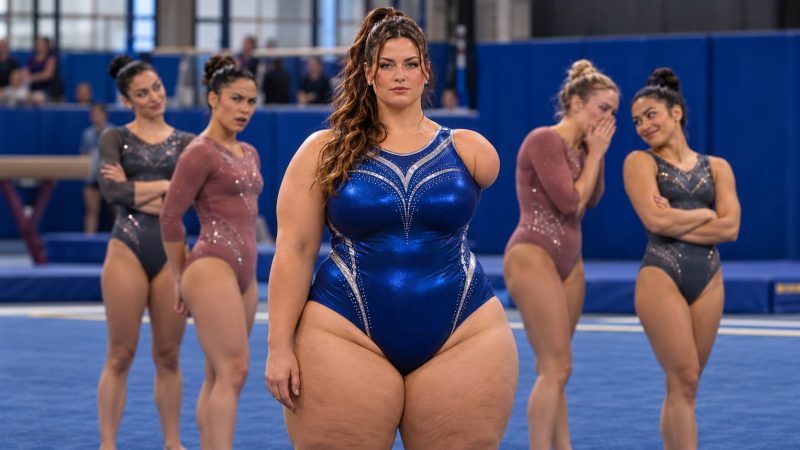
Maya stood at the edge of the gymnastics floor in a shimmering sapphire-blue leotard, with one arm and a face so calm that it seemed to make the people around her even more uncomfortable.
Behind her, two gymnasts whispered.
One glanced at Maya’s missing arm and covered a smile with her hand.
Another asked quietly,
“Is she actually competing?”
Maya heard them.
She had learned long ago how to pretend that comments like that never reached her.
That did not mean they no longer hurt.
Coach Mark approached with the competition program in his hand.
He looked at Maya for several seconds, then flipped through the pages.
“I don’t see your name here.”
“It’s under the demonstration section,” Maya replied.
Mark looked at her again.
This time, his eyes stopped at her missing arm.
“This is a regular gymnastics competition.”
Maya’s voice remained steady.
“I know.”
Mark gave an awkward smile.
“Maybe someone sent you to the wrong place. The routines here are very difficult.”
A few gymnasts laughed.
Maya said nothing.
Twelve years earlier, she had stood on a gymnastics floor just like this one with two arms.
Then one accident changed everything.
She lost her arm, spent months unable to dress herself without help, and stayed away from the gym for almost a year.
Not because she could not physically walk through the doors.
Because she knew people would stare.
The first time she returned, Maya stood outside the gym for ten minutes and went home.
The second time, she walked inside but could not bring herself to train.
The third time, she tried a simple balance movement and fell.
She became so angry that she threw her shoe at the wall.
The next morning, she came back.
That was how her second life in gymnastics began.
She could no longer perform everything exactly as she once had.
So she learned to move differently.
She rebuilt her center of balance, relearned landings, turns, transitions, and floor movements.
Later, she began coaching children whose bodies also did not fit the traditional idea of what an athlete was supposed to look like. ❤️🩹
Several of those children were sitting in the upper rows that day.
Maya spotted them.
A little girl named Sophie was gripping the edge of her seat with both hands, watching nervously.
Maya had come for her too.
The organizers were testing a new inclusive scoring system designed to judge athletes on difficulty, control, rhythm, and execution while taking each athlete’s physical abilities into account.
Maya had spent months helping develop the first version of those standards.
But in the printed program, her name had accidentally appeared near the regular competitors’ list.
And now many people believed she had simply shown up expecting to compete.
Mark gestured toward the exit.
“I think you should check with the organizers.”
Maya felt her throat tighten.
She could explain.
She could argue.
But she was tired of constantly proving to strangers that she had the right to stand in the same room as everyone else.
She picked up her jacket and turned toward the exit.
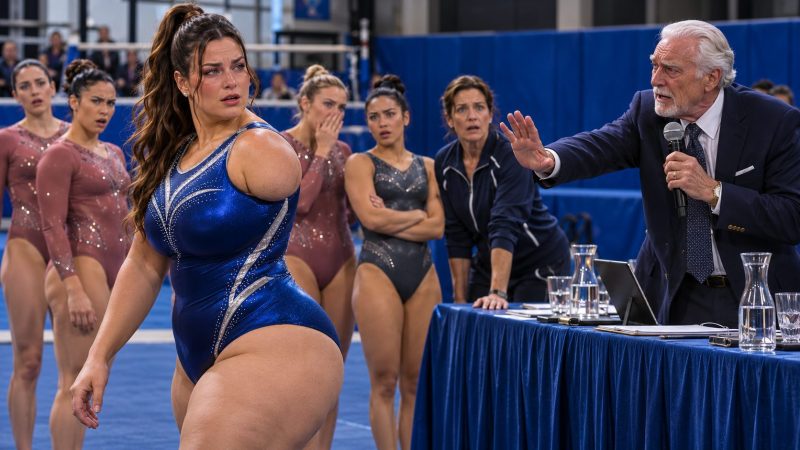
Then the head judge, Adrian, suddenly stood.
“Maya, stop.”
The entire gym went quiet.
Adrian picked up the microphone.
He did not look at Maya.
His eyes were fixed on Mark and the gymnasts who had been laughing.
“Did any of you ask why she was here before deciding she didn’t belong here?”
No one answered.
Adrian raised the program.
“Maya is an invited athlete. She is also one of the athletes who helped develop the new inclusive scoring system.”
The expression on one of the laughing gymnasts changed instantly.
Adrian continued.
“She did not come here asking for sympathy or special treatment. She came here so we can find out whether we are capable of fairly judging athletes whose bodies do not fit one single standard.”
Maya was still standing near the exit.
Adrian finally looked at her.
“If you still want to do this, the floor is yours.”
Maya remained still for several seconds.
Then she looked up toward Sophie.
The little girl gave her a small nod.
Maya placed her jacket on the bench and walked back toward the floor. 💙
She did not attempt impossible tricks just to prove a point.
She began with a controlled balance sequence.
Then she moved into a turn, lowered into a floor transition, rose smoothly, and continued across the mat.
During one transition, her foot slipped slightly.
She dropped to one knee.
Someone in the audience held their breath.
Maya stayed there for a second.
Then she rose with control and continued.
This time, nobody laughed.
When she reached her final position, she stood upright, breathing heavily.
The applause began quietly.
Then it spread through the entire gym.
Adrian picked up the microphone again.
“This was not for a medal.”
Maya looked at him.
“I know.”
“But I want you at the next review session as an athlete representative. This system cannot be fair without the voices of the athletes it is being created for.”
For a moment, Maya’s eyes glistened.
Mark approached her.
There was no smile on his face now.
“I was wrong.”
Maya looked toward Elena, a young gymnast standing nervously at the edge of the floor.
It was Elena’s first competition since recovering from an injury, and fear was written all over her face.
“If you really understand,” Maya said, “don’t prove it to me.”
Mark frowned.
“Then to whom?”
Maya nodded toward Elena.
“To her.”
Mark turned.
This time, instead of walking away, he went to stand beside the frightened gymnast.
After the competition, Maya was already heading toward the exit when she heard quick footsteps behind her.
It was Sophie.
The little girl ran toward Maya and wrapped her arms around her waist.
“I thought I could never be a gymnast with one arm.”
Maya crouched slightly so they were closer to eye level.
“And now?”
Sophie smiled.
“Now I want to try.”
Maya looked back at the nearly empty competition floor.
She had not won a medal that day.
But a child who had once believed her body decided her limits was now ready to step onto the mat.
And Maya understood that sometimes the most important victory is not making everyone applaud for you.
Sometimes it is being seen by one person who finally dares to think:
“Maybe I can do it too.” ❤️🩹